

The Five-Step No-Mess Method for Decluttering & Organising
Bookmark this quick-start guide to help you stay on track while you’re working!

What is the Five-Step No-Mess Decluttering Method?
-
The Five-Step No-Mess Decluttering Process, originally created by Dana K White, is the foundation of my service.
Designed for distractible or tired brains, this clever process means:
You never have to pull everything out and create a big mess to get started
You’ll always make progress, even if you only have a few minutes to spare
You can stop at any time, with no piles of stuff to deal with ‘later’ (AKA never)
It’s the only framework I currently recommend for people who want to make long-lasting progress toward a life less cluttered, because it doesn’t rely on emotions to help us make decisions and focuses on achievable, immediate wins.
The No-Mess Method is ideal for my fellow neurodivergent peeps, or anyone with limited time and energy (hello, exhausted parents and professionals!)
Ready to give it a try?
Want to skip to the explainer and get straight into it? Scroll on! ↓

What you’ll need
-
Preferably black (so you can’t see what’s in it and second second-guess yourself!)
You can also grab a recycling bin or bag if you have one handy and it’s part of your normal routine.
Ignore this extra step if you don’t have recycling in your area, or if it feels too hard to recycle right now, even if you really want to. (It’s OK. I promise.)
-
This box or bag will be going to your chosen donation centre (with your donations inside it) and staying there.
It needs to be something that:
you do not care about, and
will hold the weight of anything you put in it.
That’s it.
I recommend an old cardboard box, or an old shopping bag.
Please, for the love of mercy, do not use a pretty box with the word ‘Donate’ stencilled in 2010s ‘cute girl’ wedding font on the front.
We don’t want you to deal with the extra step of removing all your donations from your special ‘Donate’ box, because (ask me how I know):
you might start second-guessing what you wanted to donate, or
the ‘Donate’ box full of donations might accidentally turn into a DOOM box, because transferring the stuff from one box to another was too hard (this is a uniquely crummy kind of meta-clutter).
However, if you want to donate your pretty stencilled ‘Donate’ box along with all the donations in it, that’s allowed.
The Five-Step No-Mess Method
Step 1. Rubbish
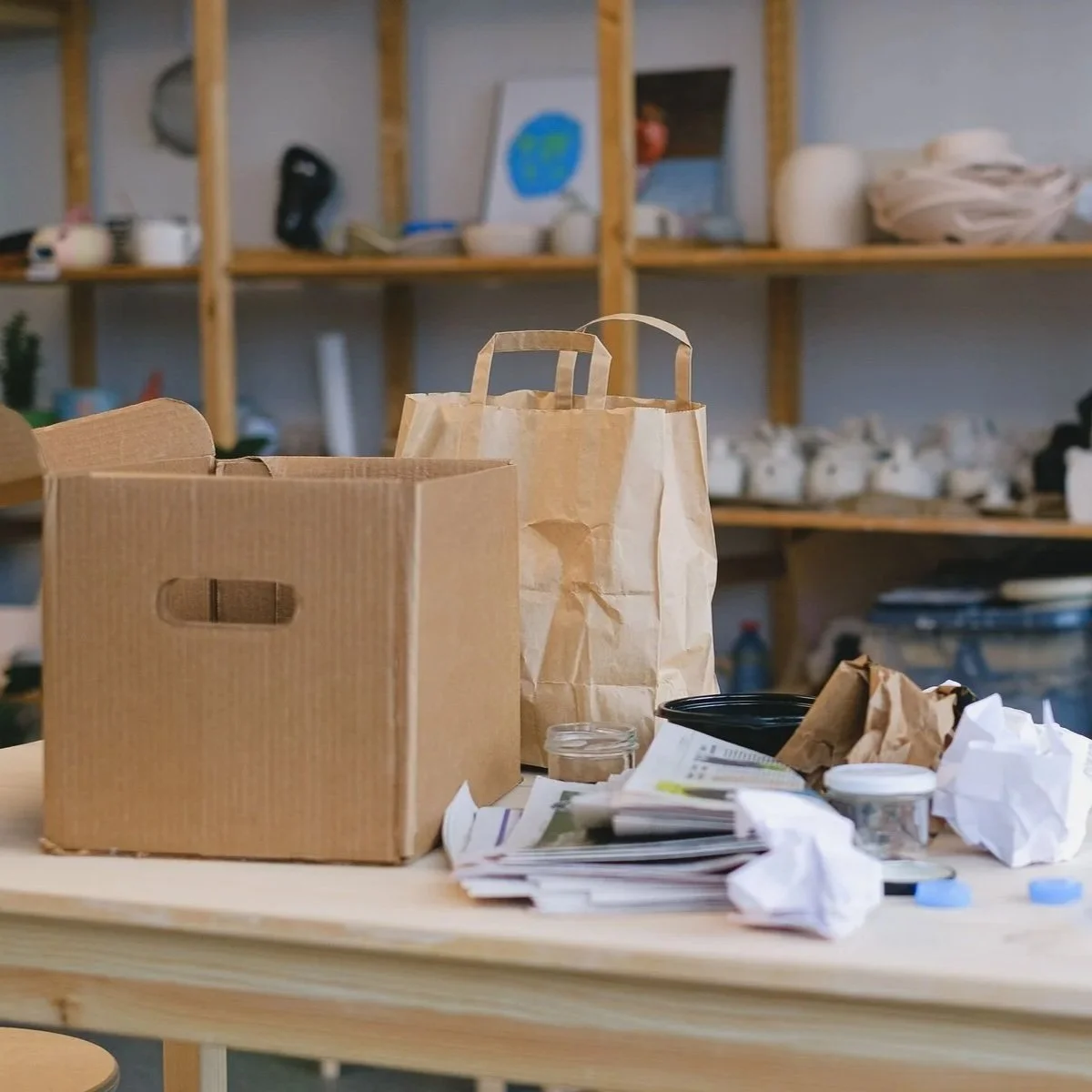
Starting in the most visible spot, remove any obvious rubbish that’s easy to access.
Put it straight into your black rubbish bag or recycling bin (if you have one).
Step 2. Easy Stuff
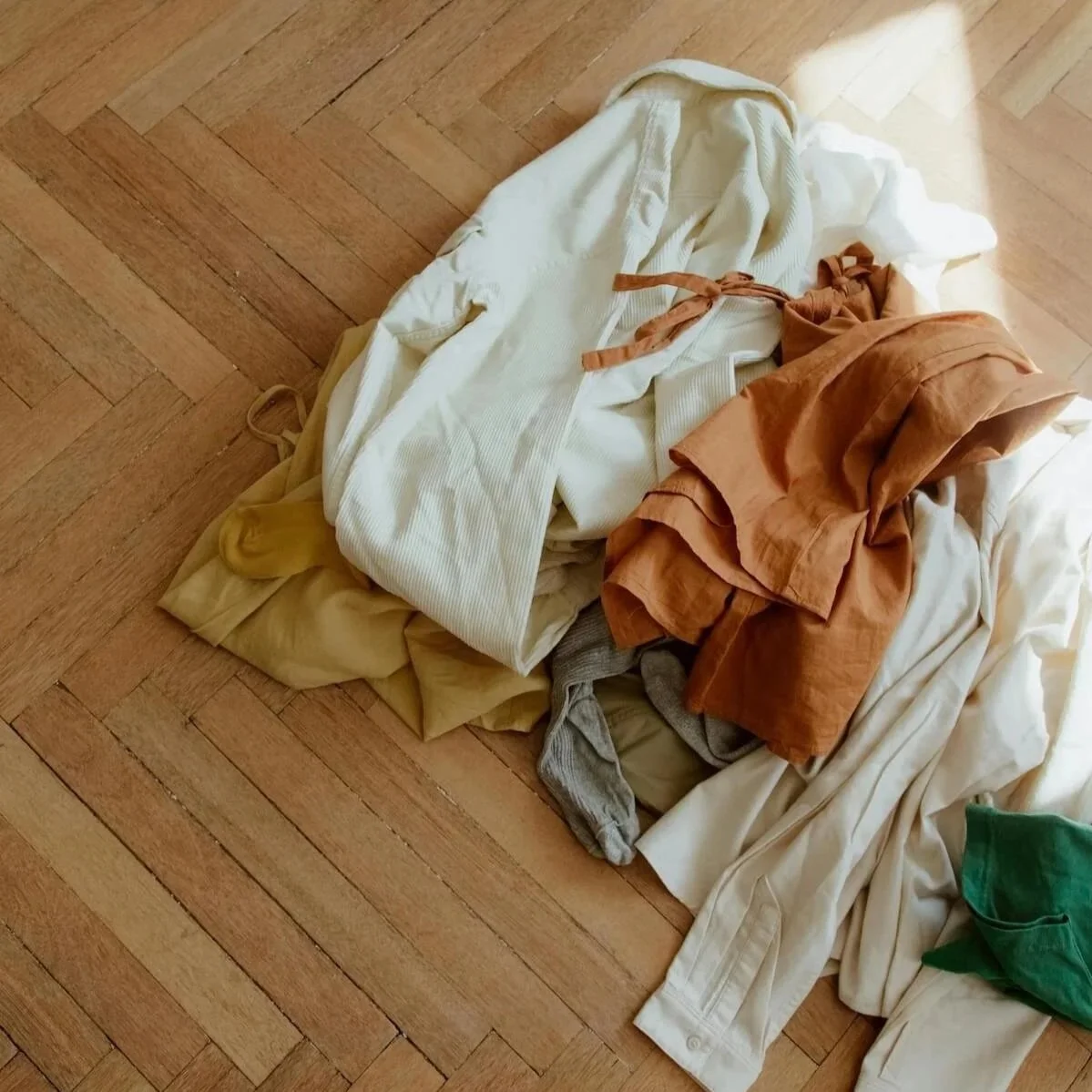
Is there anything in this space that has an established home somewhere else?
Take it there now, then come back to the spot where you’ve been working.
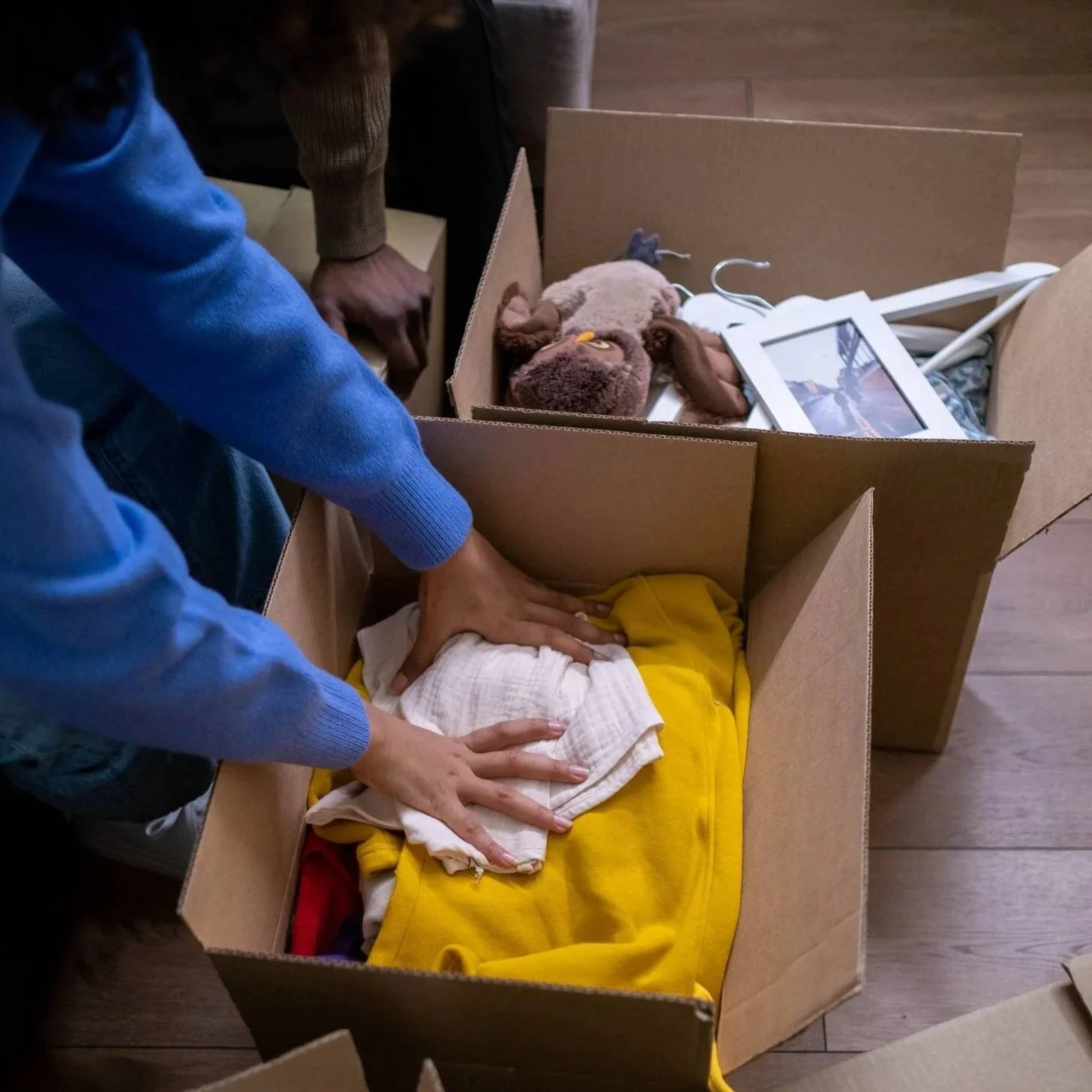
Step 3. Obvious Donations
Is there anything that makes you say: “Duh! Of course this can go!”?
If yes, it’s an obvious donation.
Put it straight into your donation box.
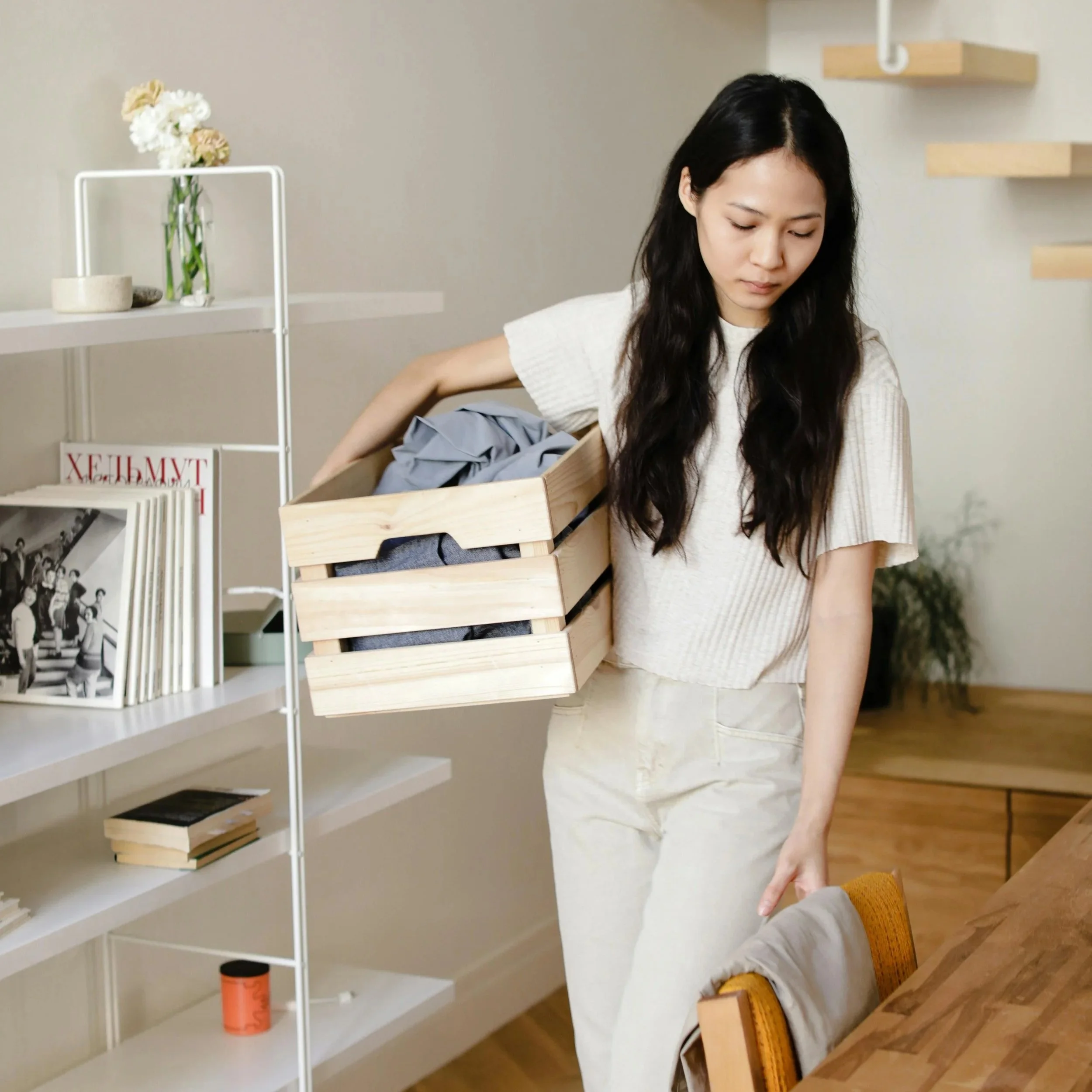
Step 4. Ask the Decluttering Questions
Q1. “If I needed [this item], where would I look for it first?”
If you know, take it there now
No idea? → Ask Q2
Q2. “If I needed [this item], would it occur to me that I already had one?”
Yes → Ask Q1 again
No → Donate!
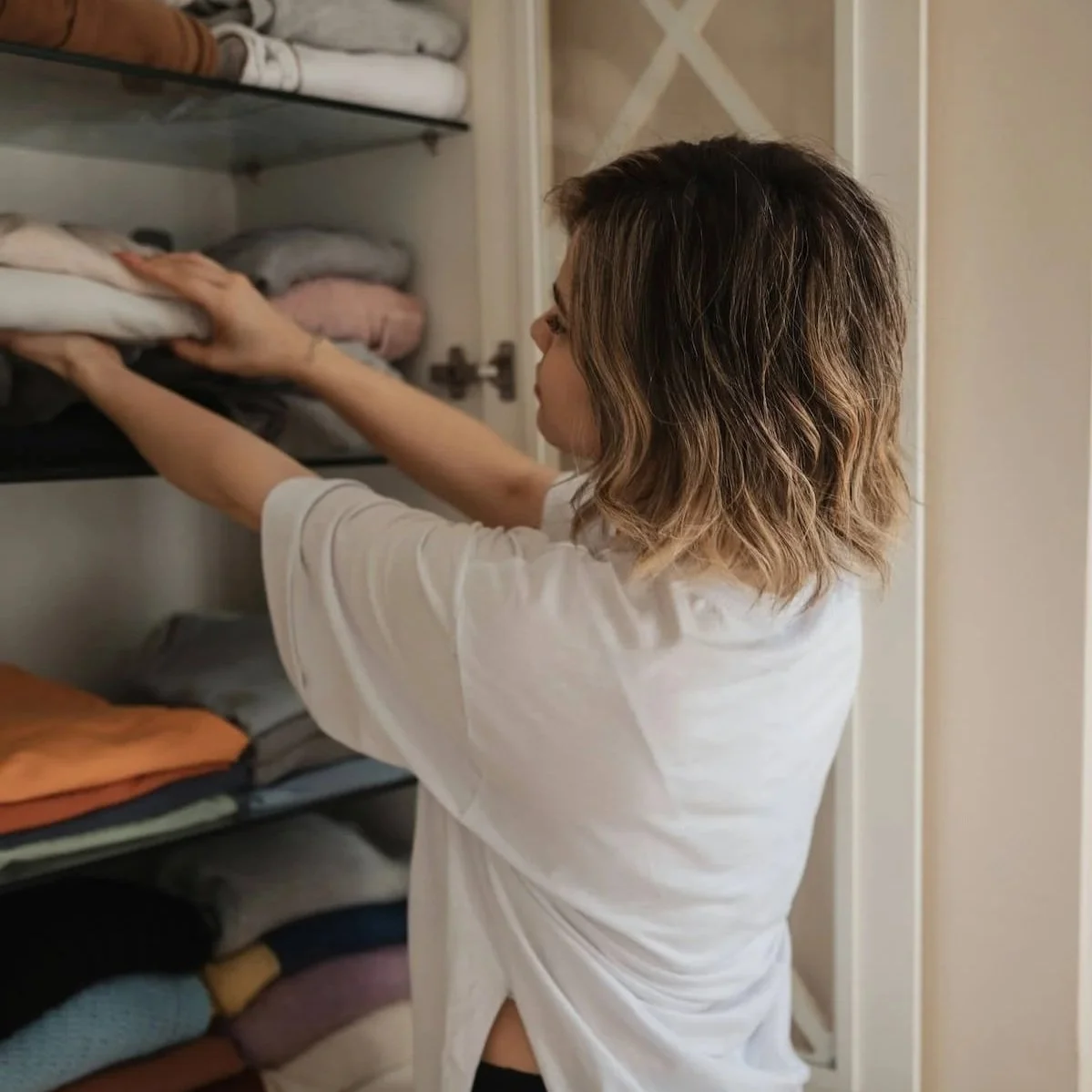
Step 5. Apply the Container Concept
Leave everything within the space as you work, and (I can’t stress this enough) avoid pulling things out or making piles!
Put like items together, then continue removing things one by one until everything that’s left fits accessibly in the available space. Rearrange or organise further if desired.
Hooray! You’re finished!
Pop your rubbish in the bin, and your recycling in its appropriate container (if that applies to your situation).
Then put your donation box or bag in the place where you would look for it first.
Ta da! You’ve just decluttered (and secretly done some organising) without making a bigger mess!
Say goodbye to mess
Say goodbye to mess
Frequently asked questions
-
The best definition of clutter I’ve found is:
“Clutter is anything that consistently gets out of control in your home.”
- Dana K White.In my experience, this usually happens when we have more stuff than we can handle.
What gets out of control for you might look very different to what used to get out of control at my place (toys were a big one!).
Since you’re the expert on all the chaos hotspots in your own home, you’re the best person to decide what counts as clutter for you.
My job isn’t to tell you what to keep and what to remove. My job is to help you identify what’s currently out of control in your home, support you to work through it so that your belongings fit accessibly in the available space, and help you build the skills and routines to finally keep things under control day-to-day with minimal effort.
Please reach out if you’re stuck!
-
Not pulling everything out is the key to preventing a bigger mess!
In my experience, pulling everything out and dumping it on the ground is a one-way ticket to a long-term pile of junk on your floor.
If you get interrupted or lose steam while there’s still stuff all over the place, you’ll eventually have to come back and deal with it later.
Let’s avoid that trap altogether!
Just start with the first piece of rubbish you can see, and leave all the other stuff where it is as you work.
That way, if you have to stop earlier than expected, you won’t have a big disaster waiting for you to deal with ‘later’ (or if you’re me: much, much later…)
-
Going item by item, one at a time, means:
We don’t make piles of stuff all over the floor (because it’s just one thing at a time)
You deal with every single thing through to completion, so there are no loose ends to tie up ‘later’ (AKA never). This means we can stop at any time!
This is the part in the process where I often suggest that people just try doing it and trusting the process, even if they think it seems inefficient.
I promise that as you work through it, you’ll experience why this makes sense (and see for yourself how it doesn’t create a bigger mess!)
-
Take it there now is one of the most powerful parts of the No-Mess Process!
It means that when we find an item that belongs somewhere else, or needs to go to the rubbish bin or donation box, we take it to its home right away.
For example, if you find something that’s Easy Stuff (it already has an established spot somewhere else in your house), you would take it there right now and put it fully away immediately.
It can seem counter-intuitive, but taking it there now means that you deal with each item to completion.
This means you can stop at any time and will never have piles of stuff to sort through when you’re finished, because everything you’ve touched is already all the way done.
-
Solve this problem by removing obvious rubbish and donations from the other space until your item fits.
Return to where you were working, and bring the extra rubbish/donations with you.
Put the new items straight into your black rubbish bag/recycling bin or donation box, then go back to the spot you were working in before and continue where you left off.
Ta da!
-
I encourage every single one of my clients to skip anything that feels too hard!
Don’t pull it out or put it in a pile to the side. Just totally skip it, leave it where it is, and move on to a less tricky item.
Leaving ‘hard’ stuff where it already is means you can keep making progress without getting stuck on something that feels too overwhelming.
Even if that item doesn’t get dealt with today, your space will still be better off than when you started.
Remember, the goal is LESS + BETTER, not PERFECT!
-
I hear you. Sometimes the thought that we have rubbish in amongst our daily items can feel like someone is saying: “Your house is dirty,” or “Why haven’t you cleaned up properly?”
I always encourage people to just have a quick look for any really obvious rubbish that might be there, just in case.
If there’s none, we can move straight on to the next step!
(But in my experience, there’s always rubbish. ALWAYS. Especially in my own house. Sigh.)
-
This is totally normal.
As you start clearing the easily visible stuff, you will almost certainly uncover more Rubbish, Easy Stuff and Donations that have been lurking underneath other things.
We simply deal with each item as we encounter it, even if it’s from a ‘previous’ step.
-
That's completely normal. Getting decluttering help can bring up big feelings: grief, guilt, overwhelm, relief.
That’s why I love the No-Mess Method, because it’s designed to reduce emotional overwhelm.
Instead of using feelings to make decisions (like ‘Does this spark joy'?), which can be exhausting, we use fact-based questions that only have one answer rather than multiple-choice.
If you find you need extra support for your mental health as you navigate letting go, please reach out to your doctor or local mental health services for assistance.
Have questions you don’t see answered here?
Please get in touch — I’m here to help!
About Dr Bea Bobbin
I’m a doctor turned Professional Organiser & Decluttering Consultant, with lived experience of neurodivergence, burnout and motherhood.
I've helped families in Canberra, Australia and beyond transform overwhelming homes into calm, functional spaces using the Five-Step No-Mess Method, originally created by Dana K White.
I’m excited to support you as you say hello to more space in your home!