How to declutter a room without getting overwhelmed
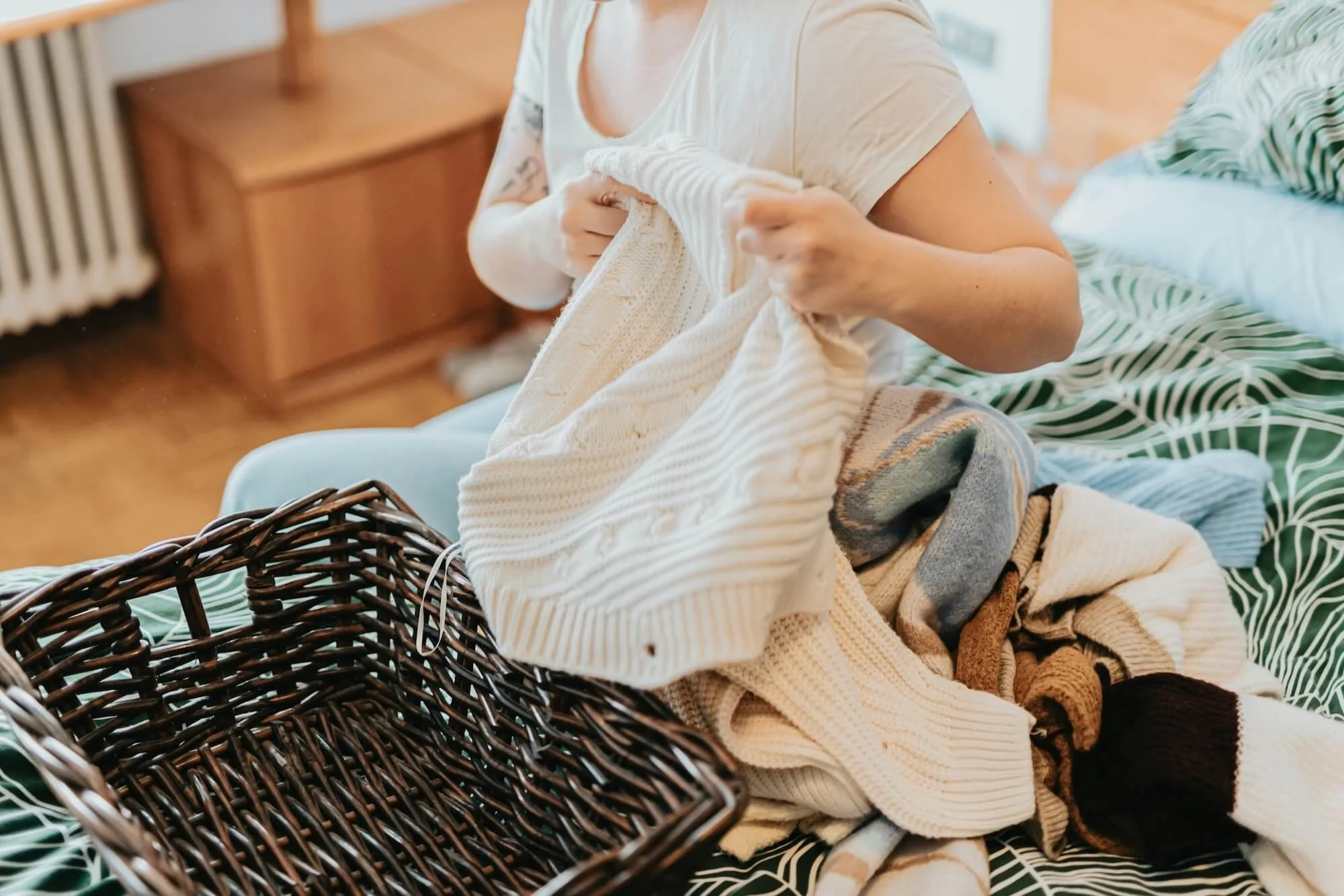
If you've ever stood in a room that needs attention and felt like giving up before you've even begun, you're not alone. And if you've tried to declutter a room before, only to end up more overwhelmed than when you started, I reckon that's not your fault. I’m willing to bet it’s because the (not-so-helpful?) advice you were trying to follow just wasn’t right for you.
Most standard decluttering guidance is written by people who don't really struggle with clutter. It assumes a level of energy, focus, and decision-making capacity that many of us simply don't have, especially on the days when our homes feel most out of control. The result is advice that works beautifully in theory, but falls apart in practice for a lot of real people with real lives.
The good news is that there's another way. A way to make genuine, visible progress in a room without the chaos, without the burnout, and without needing a perfect block of time and energy to get started. This article will walk you through it, step by step.
Table of Contents
Why decluttering a room so often leads to more overwhelm
There's a reason so many people start a decluttering session with the best of intentions and end up sitting on the floor surrounded by an even bigger mess than when they began. And it's not because they did something wrong.
The most common culprit is the pull-everything-out approach. You've probably seen it recommended by professional organisers, popular books, and well-meaning friends. The idea is that you pull every single item out of a space, sort it into piles, and work through it systematically. On paper, it sounds decisive. It feels like you're really committing to the process.
But here's what actually happens. One blogger who tried the Marie Kondo method described the experience: she pulled out every piece of clothing in her home and placed it all on her bed, including bins from under the bed, jackets from other cupboards, and things from drawers. It was, in her words, "sobering." And that was just the clothing.
When you pull everything out at once, you immediately create a situation that's harder to manage than the one you started with. You're surrounded by stuff. You have nowhere to sit, nowhere to put things, and no clear path forward. Every item demands a decision, and decision fatigue sets in fast. Before long, you're exhausted, mentally and physically, and the pile is still there, waiting.
For people who already feel overwhelmed in their homes, this approach doesn't just fail to help. It actively makes things worse, and can leave you feeling like you failed, rather than the method. If this has happened to you, it makes complete sense. But I want you to know that you weren't doing it wrong. The approach was simply wrong for you.
Making progress without overwhelm
The steps below are adapted from the Five-Step No-Mess Process developed by decluttering expert Dana K White, and it’s the method I use when working with my clients as a certified decluttering coach and professional organiser, both in Canberra and virtually Australia-wide (and beyond!)
The core principle is simple but powerful: you work through a room one item at a time, without pulling everything out first. You make one decision at a time. And you can stop at any point and your space will be better off than when you started, because nothing has been pulled out or disrupted in the process.
Here's how it works.
Step 1: Rubbish First
Start in the most visible spot in the room, wherever your eye is drawn first, and look for obvious rubbish or recycling that's easy to reach. Pick it up and put it straight into your rubbish bag or recycling bin (if you have one). Don't move on to anything else yet. Just rubbish, starting from the most visible spot, working your way through what you can see.
This step is deceptively powerful. There is almost always more rubbish than you expect, and removing it creates an immediate, visible improvement without requiring a single difficult decision. It's the perfect starting point when your energy or motivation is low.
Step 2: Easy Stuff
Once you've cleared the obvious rubbish, look for 'Easy Stuff', which is really just any item that already has an established home somewhere else in your house, but somehow ended up in this room for whatever random reason.
This is the step where the No-Mess Method asks something that feels counter-intuitive: when you find something that’s Easy Stuff, take it to its home right now. Don't make a pile. Don't put it aside. Take it there, put it away completely then return to where you were originally working.
People sometimes assume that this is inefficient, but taking it there now is actually the key to this whole process. Dealing with each item to completion means that you can stop at any time, and nothing will be worse than when you started. Everything that's been touched is already finished. So genius!
Step 3: Obvious Donations
Now we look for obvious donations, which is anything that make you think, without any hesitation: ‘Duh! Of course this can go.’ This is not the time to agonise over the hard stuff with emotional weight or complicated histories. We’re just focusing on anything we know can be donated, with no worries.
If it's an obvious donation, put it straight in your donation box. If the answer was instant, trust that instinct and keep moving.
Step 4: Ask the Decluttering Questions
For items that aren't rubbish, Easy Stuff, or obvious donations, it's time for two simple questions that help us identify what to do with whatever is left.
Question 1
"If I needed this item, where would I look for it first?"
- If you know the answer → take it there now.
- If you have no idea → move to Question 2.
Question 2:
"If I needed this item, would it even occur to me that I already had one?"
- If yes → go back to Question 1 and have another go.
- If no → pop it into your Donation box.
These questions work because they bypass the emotional spiral of "but I might need it one day" and ground the decision in something practical: did you even know you had this item, and would you know where to find it if you did? If the answer to both is uncertain, it might not be as deserving of space in your home as other items you’re more certain about.
Step 5: Does It Fit?
Once you've worked through the rubbish, Easy Stuff, obvious donations, and decluttering questions, it's time to look at what remains and ask whether it fits comfortably in the available space.
This step has two parts:
Part 1: Consolidate
Bring similar items together within the space you're working in. Keep everything within the same shelf, drawer etc. as you do this, and avoid creating piles elsewhere or pulling things out. Pop like things in with like, right where they currently are.
Part 2: Contain
If there's still too much for the space, continue removing items by looking for more rubbish, recycling, or donations you may have missed in the earlier steps. The goal is not perfection. It's that your belongings fit accessibly in the available space, without things being crammed, hidden or spilling out. Once they do, you can make it fancy with further organising or storage solutions if you'd like to, but in my experience, most people are pretty happy with the results of just having less!
What to do when you get stuck
Even with a gentle, step-by-step process, there will be moments when things feel hard. Sometimes it’s a decision that feels too big, or your energy just fizzles out. All of that is completely normal, and knowing how to handle them in advance makes all the difference.
Skip anything that feels too hard
This is one of the most important principles of the no-mess approach, and it runs completely counter to most decluttering advice. If an item feels too difficult to decide about right now, leave it exactly where it is and move on. Leaving something in place means your space is still better off than when you started. The goal is always less and better, not perfect.
If you go to take something to its home but that space is cluttered too
If your whole home is feeling cluttered, it’s really common to run into more Stuff as you go to take something there now. My biggest piece of advice is: don't let it derail you. Instead, we make enough room for the item by removing any obvious rubbish and donations until your item fits, then return to where you were working, bringing any extra rubbish or donations back with you.
When your energy runs out
Feel free to just stop. Genuinely. You don't need to push through. Because nothing has been pulled out or disrupted, you can stop at any moment and your room will be better off than when you started.
If you find that the hardest moments tend to make you freeze or want to give up entirely, it may be worth considering whether having someone alongside you would help. Working with a guide who can help you make decisions in real time, without judgement or pressure, changes the experience significantly for many people.
How to know when you've done enough for today
One of the most important skills in decluttering is knowing when to stop, and giving yourself genuine permission to do so.
The pull-everything-out approach makes stopping cleanly almost impossible. Once the room is in chaos, you're stuck. You have to keep going, even when you're exhausted, because otherwise you end up sleeping in a disaster zone (ask me how I know…)
The No-Mess Method is different. Because nothing has been pulled out, you can stop at any point and your space will be tidier, calmer and more manageable than when you began. That's true whether you've worked for ten minutes or an hour.
Stopping before you're exhausted is not a failure, it's actually the smarter strategy. Pushing through until you're overwhelmed increases the chance that you'll associate decluttering with feeling terrible, which makes it harder to start next time. Stopping while you still feel all right does the opposite: it builds a sense of momentum and makes it easier to keep going.
So, essentially, you have my encouragement to stop whenever you please! Even 30 seconds of progress leaves your space better off. Try to really notice how the room looks now, compared to when you started. Visible progress (without the disaster zone on the side) is such a good feeling!
Maintaining the progress you've made
If you've tried to declutter a room before and watched things slide back to how they were, you'll know that making progress is one thing and maintaining it is another. The worry that all your hard work will be erased is real.
I want to reassure you that maintenance is its own skill, and it takes time to develop. It's not something that just happens automatically once a space is tidier. But it does get gradually easier, as the space itself becomes simpler to manage. Fewer things means fewer decisions. Less clutter means less to tidy. The lighter the load, the easier it is to keep things in reasonable order.
One of my top strategies for maintenance is something called the ‘five-minute pick-up’. This is a signature Dana K White suggestion and it’s one I always recommend to my clients. I’ll cover it in more detail in a future blog article, but the gist is this:
It does exactly what it says on the tin: you set a timer for 5 minutes, then everyone just picks stuff up and puts it away. When the timer finishes, you are completely done and can stop.
It sounds almost too simple - how can five minutes actually help when my house feels like a blast zone?
What’s beautiful about the five-minute pick-up is that it’s super-low effort, and it’s a short, defined container of time where you are allowed to stop completely when it’s finished. This approach really takes the pressure off and makes it way less of a battle for you to maintain your progress.
It doesn’t have to be done daily (although ideally you might want to, if you can!) or at a set time, just whenever you remember. Five minutes of picking things up and putting them away nips future piles and clutter in the bud before it has time to get established.
These small, frequent efforts are far more effective long-term than marathon efforts once in a blue moon. And when you've started to build that habit, you're already most of the way there.
You Don't Have to Do This Alone
Decluttering a room is genuinely hard for a lot of people, not because they're disorganised or lazy or lack willpower, but because it's a cognitively and emotionally demanding task, especially when you're already stretched thin. Needing support to do it well isn't a sign of failure. It's a sign that you know yourself.
If you'd like help working through your home using the No-Mess Method, I offer one-on-one support both virtually (for clients anywhere in Australia and beyond) and in person for those in the Canberra region. Sessions are short, gentle and designed to work with your energy and your capacity, not against them.
If that sounds helpful, I’d love to invite you to explore my virtual decluttering coaching or in-person Canberra services. And if you're not quite ready for that, you’re very welcome to sign up for my email newsletters, where I share the best of what I’ve learned about keeping your home out of chaos while staying sane in the process.
Frequently asked questions about how to declutter a room
-
The best place to start is with rubbish. Walk into the room and pick up the first piece of obvious rubbish you can see, then put it in the bin. That's it. That's the first step. From there, work through Easy Stuff (things that belong somewhere else), then obvious donations. You don't need a plan, a perfect day, or a large block of time. You just need to start with the first visible piece of rubbish and go from there.
-
A reliable order that works well for most people is: rubbish first, then Easy Stuff (items that belong elsewhere in the house), then obvious donations, then working through remaining items using simple decluttering questions, and finally consolidating what's left so it fits comfortably in the available space. This order is deliberately designed to build momentum quickly and avoid getting stuck on hard decisions too early.
-
The most common mistake is pulling everything out at once. It looks decisive, but it creates a bigger mess than you started with, burns through your decision-making energy fast, and makes it very hard to stop cleanly. Other common mistakes include trying to tackle too much in one session, keeping items out of guilt rather than genuine usefulness, and aiming for perfection rather than progress. The goal is always less and better, not perfect.
-
I always recommend starting in the most visible area of your home. This is typically your entryway, which is usually the first spot visitors see as they walk in the front door. Visible improvement in a space you see constantly tends to build the most motivation to keep going, because you walk past it multiple times a day and notice the difference. Instant momentum!